Apple's upcoming price hikes are good for the company not so good for consumers
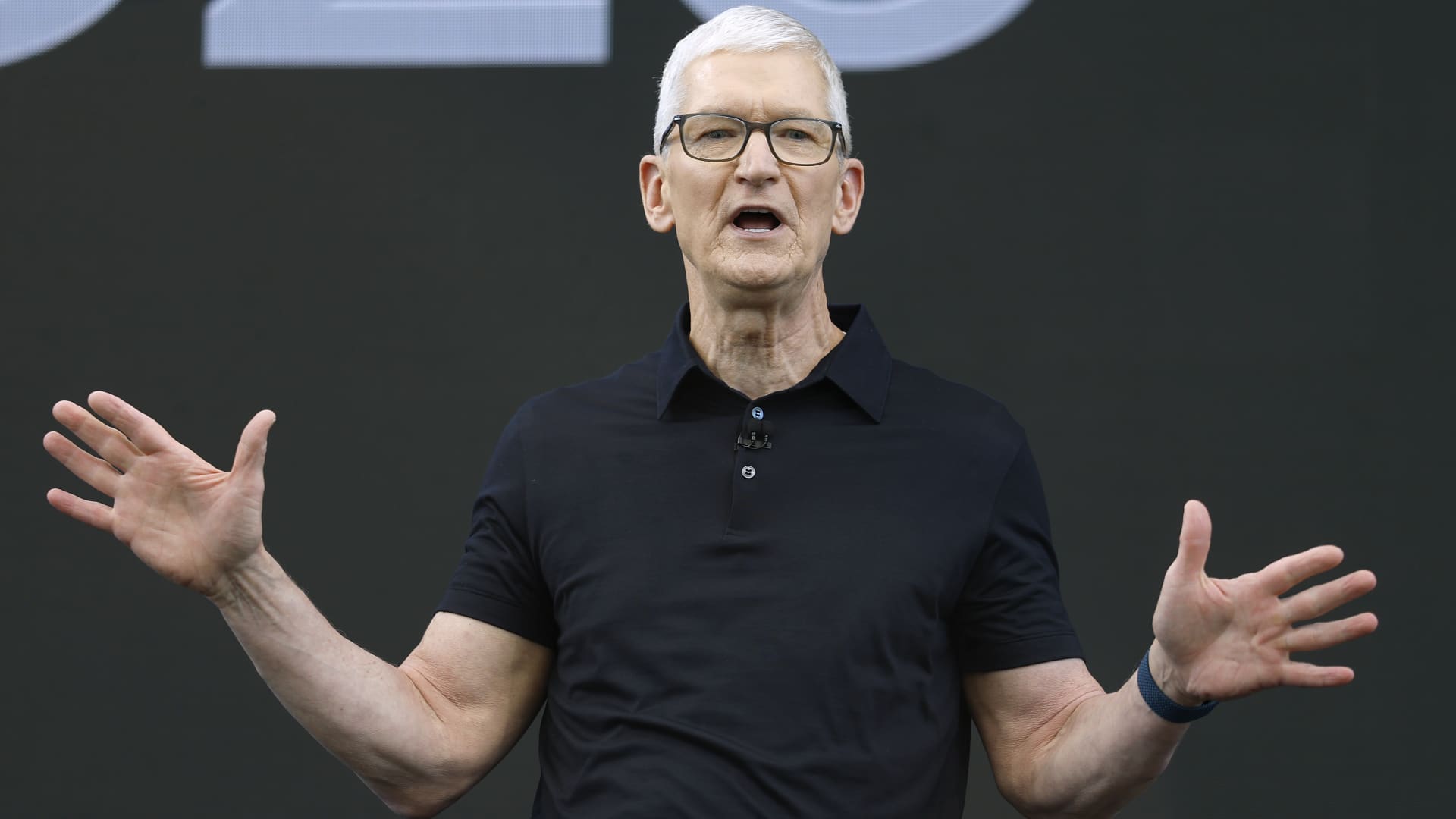
Apple is throwing in the towel. Price increases on its popular devices are coming due to the massive — and ongoing — global shortage of memory and storage chips. Tim Cook , outgoing Apple CEO, told The Wall Street Journal in an interview: "We're doing our best to mitigate the huge increases that are being passed to us, and we've been trying to shield our customers from the increases, but the situation has become unsustainable." Cook did not talk about which products would be impacted, nor did he reveal anything about the magnitude of the price hikes or timing. The next iPhone Pro model could go up by $270, according to estimates from research firm TechInsights, which was cited in the WSJ report. The Journal said that iPhone price increases probably won't come until the fall launch event, but speculated that prices on Macs and iPads could happen sooner ( some models got price increases already ). Analyst notes from Evercore ISI and Bank of America estimated those iPhone price increases would be more modest, closer to $100. Memory and storage prices have been on the rise for a while, with Apple really feeling the pinch in the past couple of quarters. During the company's most recent earnings call in April, Cook said he expected "significantly higher memory costs" in the June quarter. He added, "Beyond the June quarter, we believe memory costs will drive an increasing impact on our business, and we'll continue to evaluate this." Here is what's going on: The capacity to produce memory and storage is being gobbled up by the hyperscalers, which need data center-grade chips to keep providing ever-increasing compute to power artificial intelligence workloads. That means there's less capacity to make the kinds of memory and storage chips needed in consumer electronics like smartphones and personal computers. So, both sides of the equation can't get enough memory and storage, leading to the skyrocketing prices. "I talked with Tim Cook last night. He's very aggrieved. You can price out people. He certainly doesn't want to do that, but he did mention to me [that Apple] exhausted all our whatever we have in DRAM, and that in the old days they used to be able to really bargain for DRAM, and now the hyperscalers just take," Jim said during Thursday's Morning Meeting for Club members. "Just be aware that this could be a winner, Apple, but the consumer could be a loser." Apple shares rose modestly Thursday. They came off the boil in recent weeks — but at just under $300 each, they are not too far from their $315 record-high close on June 2. AAPL YTD mountain Apple YTD The price hike news from Apple doesn't come as too much of a surprise. Companies can deal with rising input costs in one of two ways — either they eat the cost and accept the margin crunch, or they pass the costs through and accept whatever demand destruction may come. Fortunately for Apple, the combination of best-in-class products and services, a tightly controlled ecosystem, and a loyal customer base that tends to skew higher-end means that demand destruction is likely to be minimal. The muted reaction to the WSJ news also shows that Wall Street views the margin protection aspect of this — and, in turn, earnings growth potential — as more material than any concerns regarding demand. Demand also stands to prove resilient thanks to the fact that buyers rarely pay full price for an iPhone as mobile service providers usually subsidize most of the cost. But, like Apple, can the carriers absorb all of the increases? They have margins to protect, too. Apple could also look to only raise prices on higher-end models, which consumers with more discretionary dollars are likely to be a bit less price sensitive. That way, Apple could maybe leave the cost of entry-level models unchanged, and keep the cost to enter the ecosystem, where Apple can then sell higher-margin services, more affordable. It is notable that the news is coming out now, about 10 days after Apple reassured investors that it is ramping up AI. It's not like Apple suddenly woke up and said, "Wow, memory prices are really high." It was only on June 8 that Apple unveiled an AI-enhanced Siri at its annual developers conference. Powered by its partnership with Google's Gemini, a conversational Siri makes Apple devices that much more intuitive and efficient to use. It's also one way to justify higher prices to consumers. Bottom line While not thrilled about the idea of price increases for already-strapped consumers, we like the move from the perspective of being an Apple shareholder because it will protect margins. Between Apple's popular devices, its sticky ecosystem, more affluent consumer base, and the coming era of Apple Intelligence with a supercharged Siri, we think demand will prove largely unaffected by the price hikes. (Jim Cramer's Charitable Trust is long AAPL, GOOGL. See here for a full list of the stocks.) As a subscriber to the CNBC Investing Club with Jim Cramer, you will receive a trade alert before Jim makes a trade. Jim waits 45 minutes after sending a trade alert before buying or selling a stock in his charitable trust's portfolio. If Jim has talked about a stock on CNBC TV, he waits 72 hours after issuing the trade alert before executing the trade. THE ABOVE INVESTING CLUB INFORMATION IS SUBJECT TO OUR TERMS AND CONDITIONS AND PRIVACY POLICY , TOGETHER WITH OUR DISCLAIMER . NO FIDUCIARY OBLIGATION OR DUTY EXISTS, OR IS CREATED, BY VIRTUE OF YOUR RECEIPT OF ANY INFORMATION PROVIDED IN CONNECTION WITH THE INVESTING CLUB. NO SPECIFIC OUTCOME OR PROFIT IS GUARANTEED.